Odoo Slides & Videos

Odoo Slides & Videos

Presentation decks and explainer videos that Quartile has used at events and webinars, covering Odoo implementation, customization, Japanese localization, and open source community work.

Last Update 08/02/2026
Completion Time 2 hours 31 minutes
Members 1
How to Get Involved in OCA Activities (Odoo Open Talk, July 2026 — slides in Japanese)

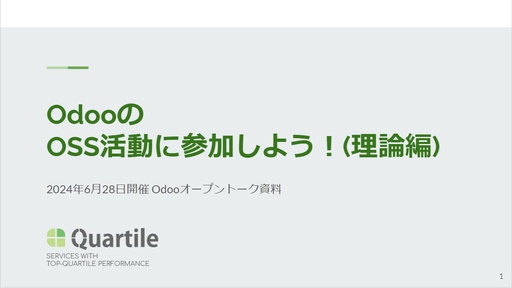
These slides are in Japanese. They were presented at an Odoo Open Talk held on 31 July 2026, and set out how to start contributing to the OCA (Odoo Community Association) — for people who write code and for people who don't.

The number of companies using Odoo in Japan has grown, but the number giving back to the ecosystem has not. This deck assumes that gap is not about willingness but about knowing where the entry points are, and aims to make the first step concrete.

What the deck covers

  • What the OCA (Odoo Community Association) is — its relationship with Odoo S.A., and its AGPL/LGPL output
  • Contribution is not only writing code — translation, issues, review, documentation
  • Turn what troubles you into an issue — put it in the open instead of solving it internally
  • The developer route — from signing the CLA to opening a small PR
  • How a PR reaches merge, and how long that realistically takes
  • A worked example: how a two-line PR progressed (OCA/account-invoicing#2201)
  • Mistakes new contributors commonly make — opening translation PRs directly, and others
  • Rules for contributing with AI — the OCA Generative AI / LLM Policy (effective July 2026)
  • Beyond individual contribution — why company commitment is necessary
  • Realistic entry points for the Japanese community
  • Glossary

Links

Links inside the slides are clickable once you download the PDF.

Odoo Overview / Know-how
View all
New Content
How to Get Involved in OCA Activities (Odoo Open Talk, July 2026 — slides in Japanese)
Preview

These slides are in Japanese. They were presented at an Odoo Open Talk held on 31 July 2026, and set out how to start contributing to the OCA (Odoo Community Association) — for people who write code and for people who don't.

The number of companies using Odoo in Japan has grown, but the number giving back to the ecosystem has not. This deck assumes that gap is not about willingness but about knowing where the entry points are, and aims to make the first step concrete.

What the deck covers

  • What the OCA (Odoo Community Association) is — its relationship with Odoo S.A., and its AGPL/LGPL output
  • Contribution is not only writing code — translation, issues, review, documentation
  • Turn what troubles you into an issue — put it in the open instead of solving it internally
  • The developer route — from signing the CLA to opening a small PR
  • How a PR reaches merge, and how long that realistically takes
  • A worked example: how a two-line PR progressed (OCA/account-invoicing#2201)
  • Mistakes new contributors commonly make — opening translation PRs directly, and others
  • Rules for contributing with AI — the OCA Generative AI / LLM Policy (effective July 2026)
  • Beyond individual contribution — why company commitment is necessary
  • Realistic entry points for the Japanese community
  • Glossary

Links

Links inside the slides are clickable once you download the PDF.

Odoo in Japan: Strengths, Challenges, and the OSS Question
Preview

Presented at the Odoo Partner Session on 24 June 2026. The deck sets out how far Odoo gets in the Japanese market, where it stalls, and the role open source plays in getting past that.

The slides are mainly in English, with Japanese alongside the key points.

What the deck covers

  • Why the playbook that worked globally stalls in Japan — Japanese UI and documentation are mandatory, the linguistic distance is large, processes bend to trading partners, commercial customs are distinctive, adoption decisions are cautious and precedent-driven, and domestic accounting and HR software is strong
  • The turning point — Odoo brought translation in-house in 2023 and the Japanese UI is now genuinely usable, awareness is rising, and AI is collapsing the language and implementation barrier
  • The state of OCA contribution — 448 of 3,300 partners contributed to OCA in 2024, and as the partner count passes 16,000 that share keeps shrinking
  • Three asks of Odoo S.A. — recognise the partners who contribute, collaborate on Japanese localization instead of duplicating it, and teach new partners the norms of open source
  • What breaks the virtuous cycle — free-riding on OCA, treating "open" as marketing rather than practice, localization lag eroding satisfaction, and losing differentiation into price competition
  • Why a healthy OSS ecosystem serves Odoo S.A.'s own business — lower acquisition cost, faster product improvement, and stronger partners

Related links

Making Odoo's Printed Reports Work in Japan, Part 5 — Changing the wording of labels
Preview

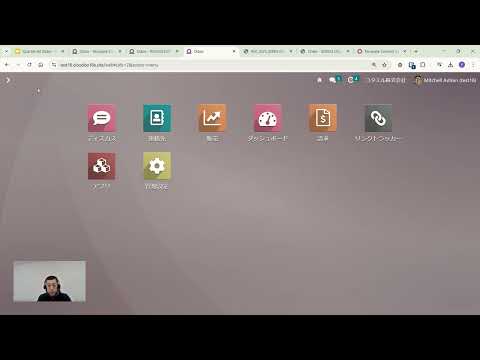
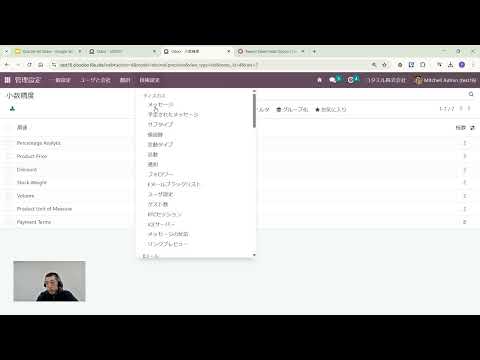
How to change the wording of a label on a printed report. This is part 5 of a five-part series on the recurring problems with Odoo's printed reports in Japan. The video is in Japanese.

The Odoo version used throughout is 16.0.

The problem addressed here

  • a label needs different wording — for example shortening Salesperson to simply the person in charge

OCA module used

Other parts of the series

Related links

Making Odoo's Printed Reports Work in Japan, Part 4 — Adjusting how unit prices and quantities are shown
Preview

How to adjust the displayed precision of unit prices and quantities. This is part 4 of a five-part series on the recurring problems with Odoo's printed reports in Japan. The video is in Japanese.

The Odoo version used throughout is 16.0.

The problem addressed here

  • unit price and quantity fields print at a finer precision than needed, showing unwanted decimals

OCA module used

Other parts of the series

Related links

Making Odoo's Printed Reports Work in Japan, Part 3 — Switching the layout to the Japanese convention
Preview

How to switch the report layout to the form normally used in Japan. This is part 3 of a five-part series on the recurring problems with Odoo's printed reports in Japan. The video is in Japanese.

The Odoo version used throughout is 16.0.

The problem addressed here

  • the layout differs from Japanese convention, putting your own company details at the top

OCA module used

Other parts of the series

Related links

Making Odoo's Printed Reports Work in Japan, Part 2 — Adding the honorifics Onchu and Sama
Making Odoo's Printed Reports Work in Japan, Part 1 — Registration number and Japanese prefecture names
Preview

How to deal with the country name in the address block, a missing tax registration number, and romanised prefecture names. This is part 1 of a five-part series on the recurring problems with Odoo's printed reports in Japan. The video is in Japanese.

The Odoo version used throughout is 16.0.

The problem addressed here

  • the address block includes the country name Japan
  • your own tax registration number does not appear
  • prefecture names are rendered in romanised English

OCA module used

Other parts of the series

Related links

Why Quartile Takes Part in Odoo's Open Source Community
Preview

A talk on why Quartile takes part in the Odoo open source community. The video is in Japanese.

It introduces the work the company does in the community, then sets out the problems with proprietary software and what open source changes about them.

What the video covers

  • An introduction to Quartile's community work
  • The problems with proprietary software
  • What characterises open source
  • The benefits open source brings

Related links

Why Take Part in Odoo's Open Source Community (Part 1: The Why)
Preview

Used at an Odoo Open Talk in June 2024. These slides are in Japanese. Before telling anyone to contribute, the deck explains how the Odoo ecosystem actually turns and why it needs more participants right now.

This session is about background and reasoning rather than procedure.

What the deck covers

  • Odoo's history and licence changes — from TinyERP to OpenERP to Odoo, through GPL and AGPL, and the move to an LGPL-plus-proprietary open core model in October 2015
  • Why the shift to open core happened — under AGPL the vendor struggled to secure revenue and had to lean on selling services
  • How the licences differ — LGPLv3 lets proprietary features sit on top; AGPLv3 extends to dependent code and requires source to be obtainable
  • Odoo's growth cycle — product improvement, user base, monetisation, and reinvestment, with open source acting as the leverage
  • Who is in the ecosystem — Odoo S.A., partners, other service providers, OSS contributors, and users, and how each connects
  • How Odoo's focus changed — after the open core shift, the sales side of the business inevitably grew louder
  • The present concern — many market-facing staff and partners appear indifferent to the OSS ecosystem, and newly joining partners do not take part in it
  • The worst case for users — roughly 60% of user requirements can be met with existing OCA modules, so if that ecosystem dies the answer reverts to bespoke proprietary development
  • Reasons to take part, set against the reasons people give for not taking part
  • What anyone can do first — use a community module, tell your users you are using it, and write about it publicly

Related links

Adjusting Odoo's Japanese UI — How Translation Works Under the Hood
Preview

Used at an Odoo Open Talk on 14 June 2024. These slides are in Japanese. When Odoo's Japanese display will not behave, this deck explains what to touch and why, starting from how translation is built.

Note that Odoo core has since moved its translation platform from Transifex to Weblate. For the current procedure, see the separate Weblate deck.

What the deck covers

  • What is translatable — field labels, menus, buttons, help text, reports, mail templates, the website, error and warning messages, and data fields defined as translatable
  • How to spot it in the source — translate=True on a Python field definition, messages wrapped in the underscore function, and strings inside XML views and templates
  • Differences by ownership — Odoo core, OCA modules, and your own custom modules each update their translation files by a different route
  • Differences by engine — some strings are handled server-side and some on the front end, and website templates are where the constraints bite
  • Where translation data is stored — held in a table up to 15.0, then as jsonb on the field itself from 16.0. Faster, but harder to adjust from the UI
  • Applying project-specific wording — update the translation file normally for custom modules, and drop override translations into an i18n_extra folder for standard features
  • A common problem — term collisions within one module, where words like Send or State need different translations by context but share one source string
  • Useful OCA modules — template_content_swapper and report_qweb_field_converter

Related links

Advancing Japan's DX with the Open Source ERP Odoo
Preview

Presented at the Fukuoka Integration X (FIX) online event on 7 February 2024. These slides are in Japanese. Aimed at people new to Odoo, the deck lays out the product and its ecosystem, then shows how to handle the things that trip people up when using it in Japan.

It focuses in particular on partner address handling and on printing quotations, invoices, and purchase orders.

What the deck covers

  • What Odoo is — the most widely used open source business application suite, its technical stack, the breadth of what it covers, multi-currency and multi-language support, and the size of its community
  • What makes Odoo distinctive — low cost, broad functional coverage, and genuine global capability
  • Odoo and open source — the growth cycle, the difference between Community and Enterprise, and where OCA sits
  • Characteristics of the Japanese market — Japanese-language material and a Japanese product UI are mandatory, commercial customs are distinctive, failure is avoided, and little is published in English
  • Working through the friction in a demo — how far OCA community modules get you against Japan-specific requirements
  • How to try Odoo for yourself
  • Practical advice for running an Odoo implementation project

Related links

Customizing Odoo — Module Structure and the Basics of Extension
Preview

Slides from the live webinar "Get to know Odoo customization" on 31 August 2023. These slides are in Japanese. Aimed at drawing software engineers toward Odoo, the deck takes two real business requirements and shows the standard-configuration answer next to the custom-code answer.

It goes all the way down into code and module structure.

What the deck covers

  • What customizing Odoo means — configuration versus add-on development, and the Python, PostgreSQL, JavaScript, and QWeb stack behind it
  • Why customization should be avoided where possible — it costs money, makes maintenance harder, and makes version upgrades painful
  • Worked example 1 — showing the tax registration number on invoices for Japan's qualified invoice system. Document layout settings cover most of it; an add-on module handles the rest
  • Worked example 2 — preventing deletion of accounting evidence attachments for Japan's electronic bookkeeping law, using attachment_delete_restrict to set which groups and users may delete per model
  • Odoo's module structure — every feature is a module, stacked by dependency through base, web, mail, product, account, and sale. A custom module is technically the same kind of thing as a standard one
  • What a module is made of — business objects, data files, web controllers, and static web assets
  • Real code — __manifest__.py, a model definition, and the XML for inheriting a view
  • Rules for writing modules — extend rather than override, go through the ORM, do not build what is not needed, split by business purpose, and do not breach licences
  • Understanding open source — what OCA does, and how LGPLv3 differs from AGPLv3. Odoo is not licence-free

Related links

Default channel for slides, all public users can access content of this channel.