
Odoo has two things called a "community".
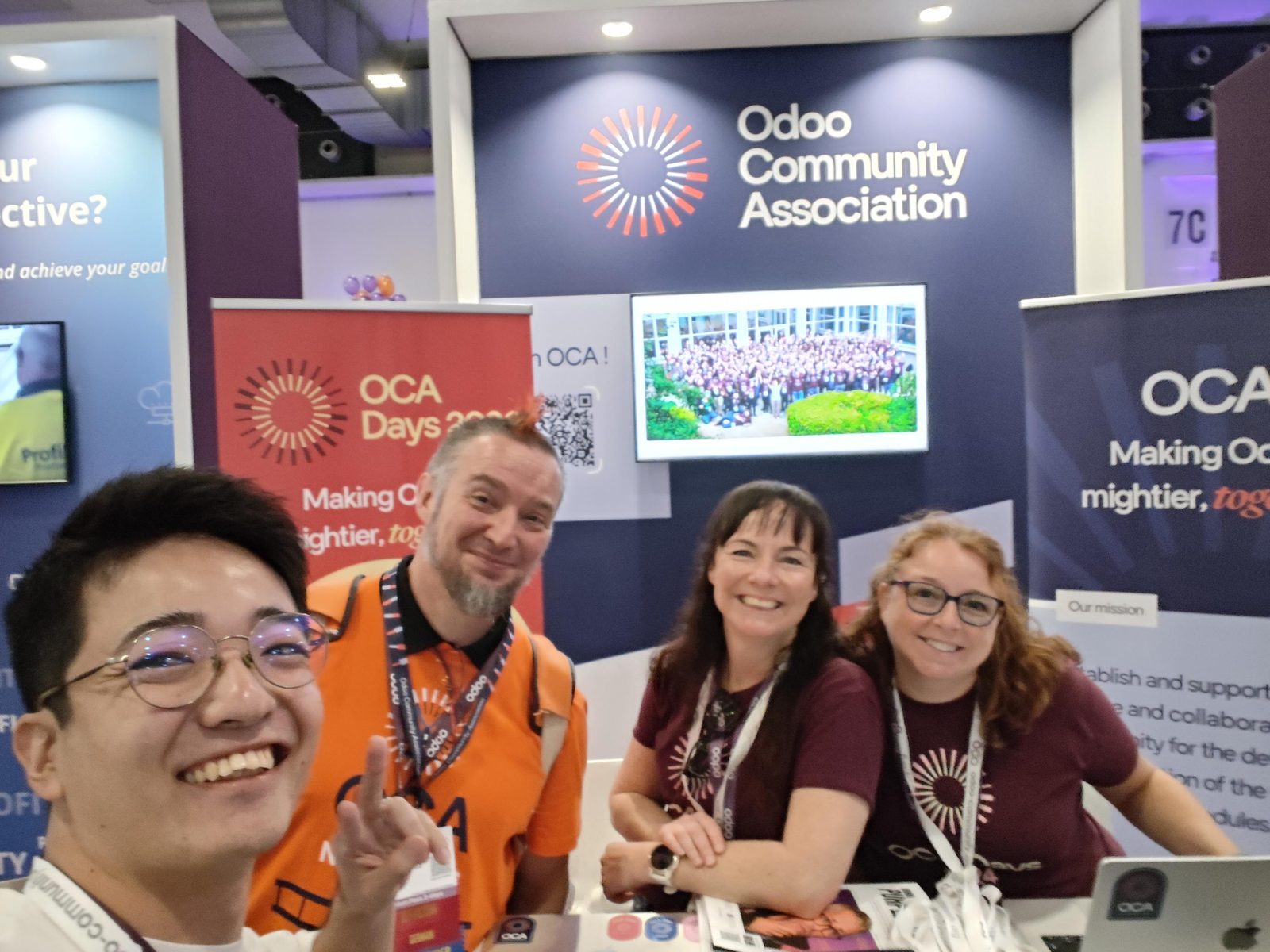
The first is the Odoo Community Association, or OCA. It is the community that develops and publishes open-source modules for Odoo.
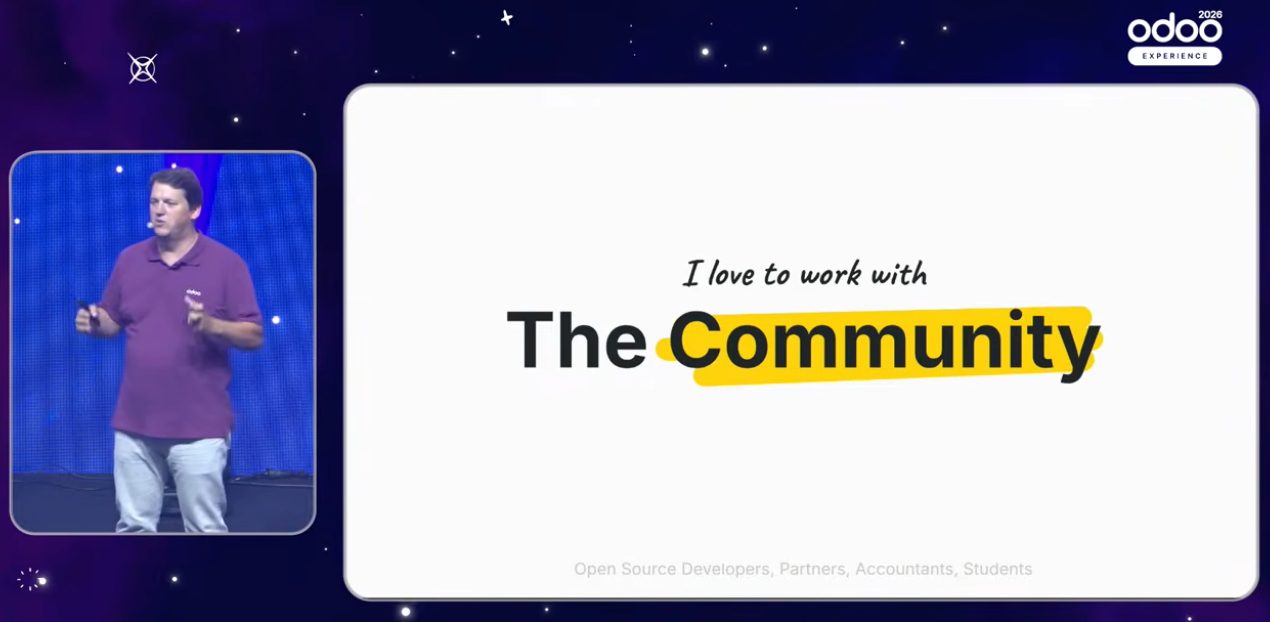
The second is everyone involved in the Odoo ecosystem: customers, partners, developers and more (as Odoo S.A. CEO Fabien puts it: video).
Once a year, each community holds a big event in Belgium. These are OCA Days (run by the OCA) and Odoo Experience (run by Odoo S.A.).
This year, in September 2026, I went to both.
At OCA Days I felt "a community that builds together", and at Odoo Experience "an ecosystem that gathers around Odoo". This post sets out the differences.
Who attends
OCA Days was mostly engineers. The people who build and review modules day to day were there in person.
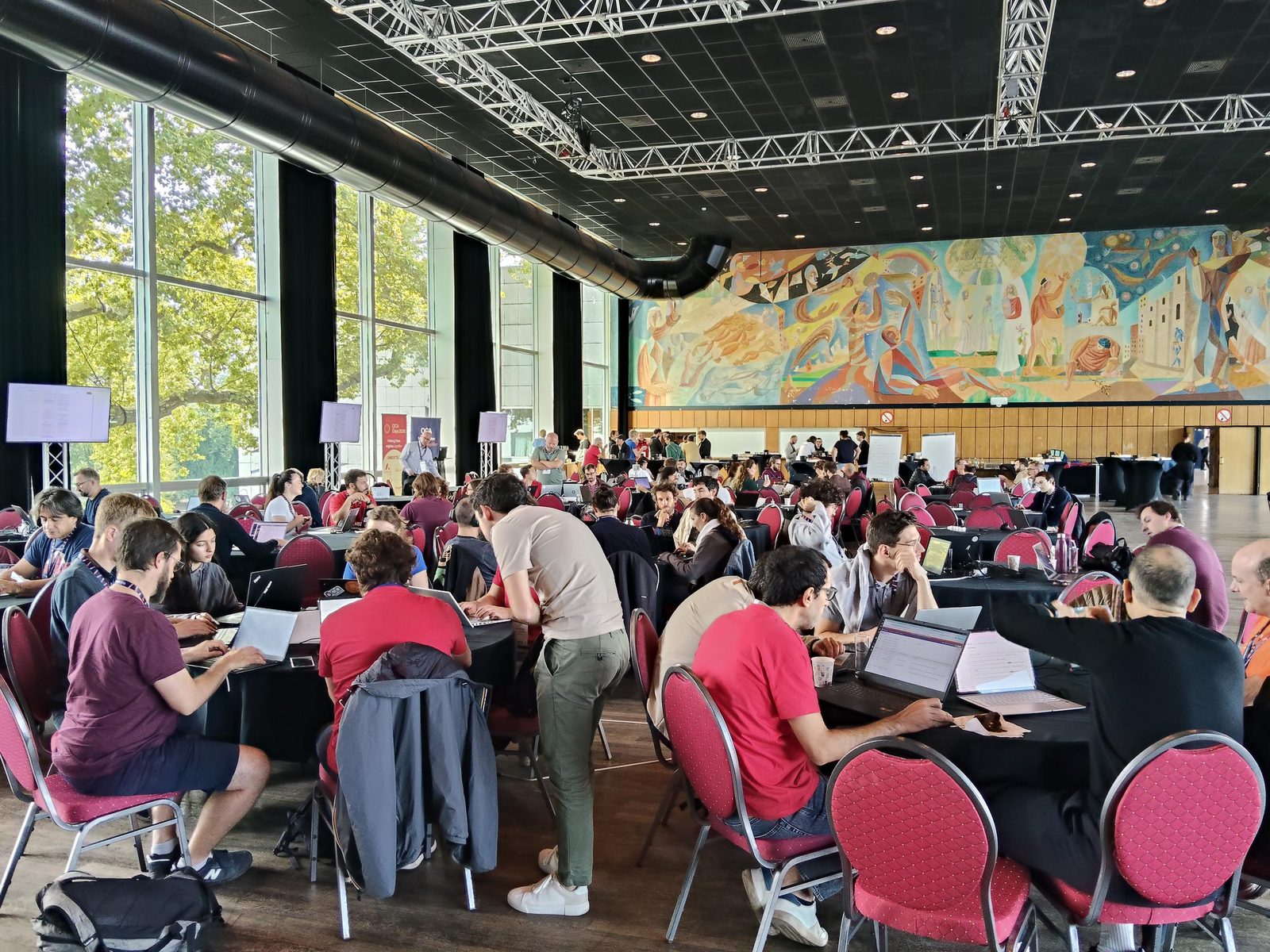
Most of the venue was given over to a Code Sprint (everyone gets together and develops), and the engineers got to know each other through the work.
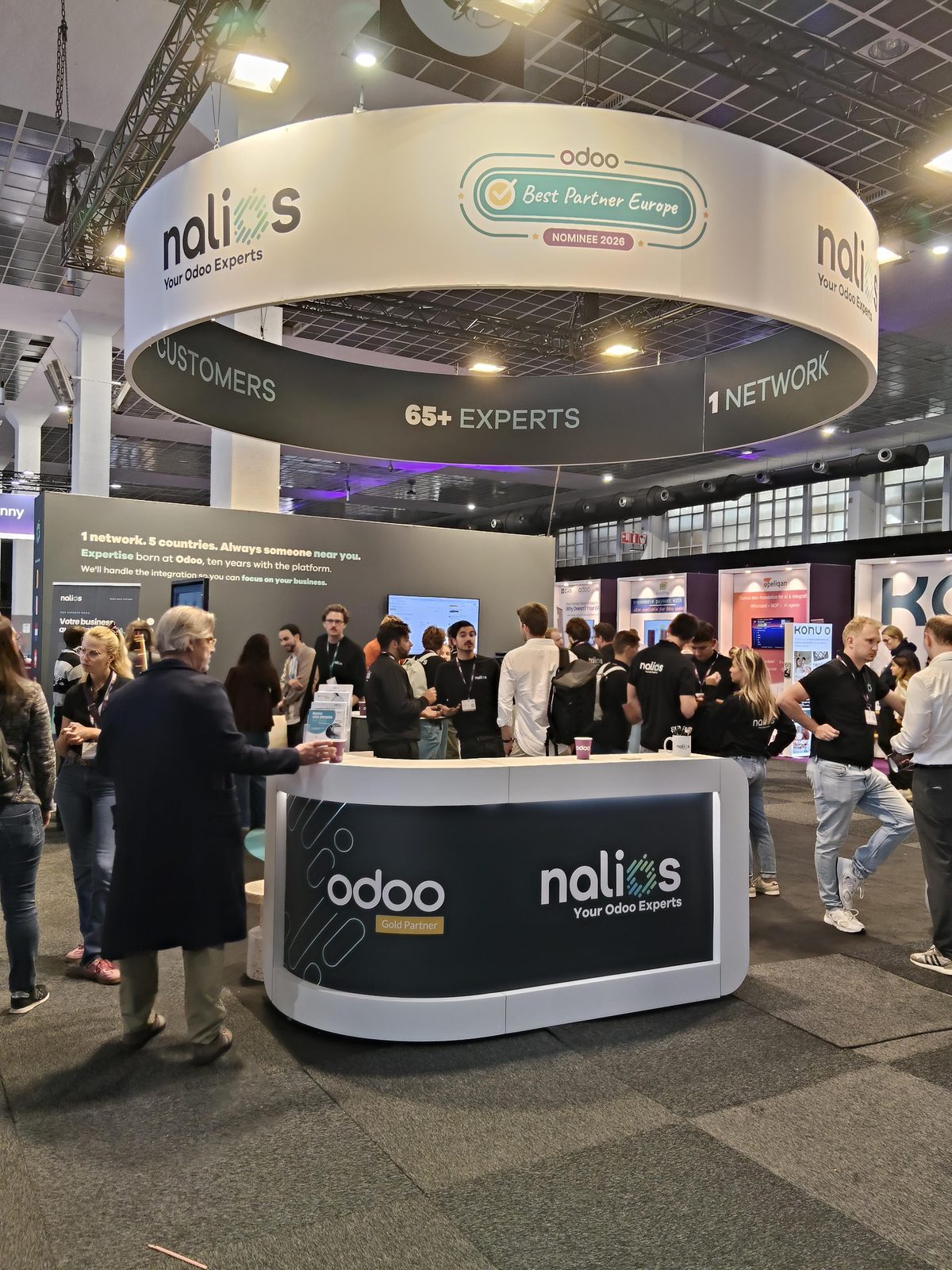
Odoo Experience drew a much wider crowd: Odoo vendors, companies that use Odoo, companies whose services integrate with Odoo, and of course the people of Odoo itself.
The venue was lined with vendor booths, each presenting its services and track record to user companies (rather like Japan IT Week).
The sessions
The sessions at OCA Days were mainly technical.
Speakers and attendees were close, and a question about a talk would turn straight into a discussion. Many sessions had the speaker share how they tackled a problem, then take it further through questions from the floor.
It was not only technical, either: there were also discussions about where the community is heading, such as "how should we use AI as a community?", which left an impression.
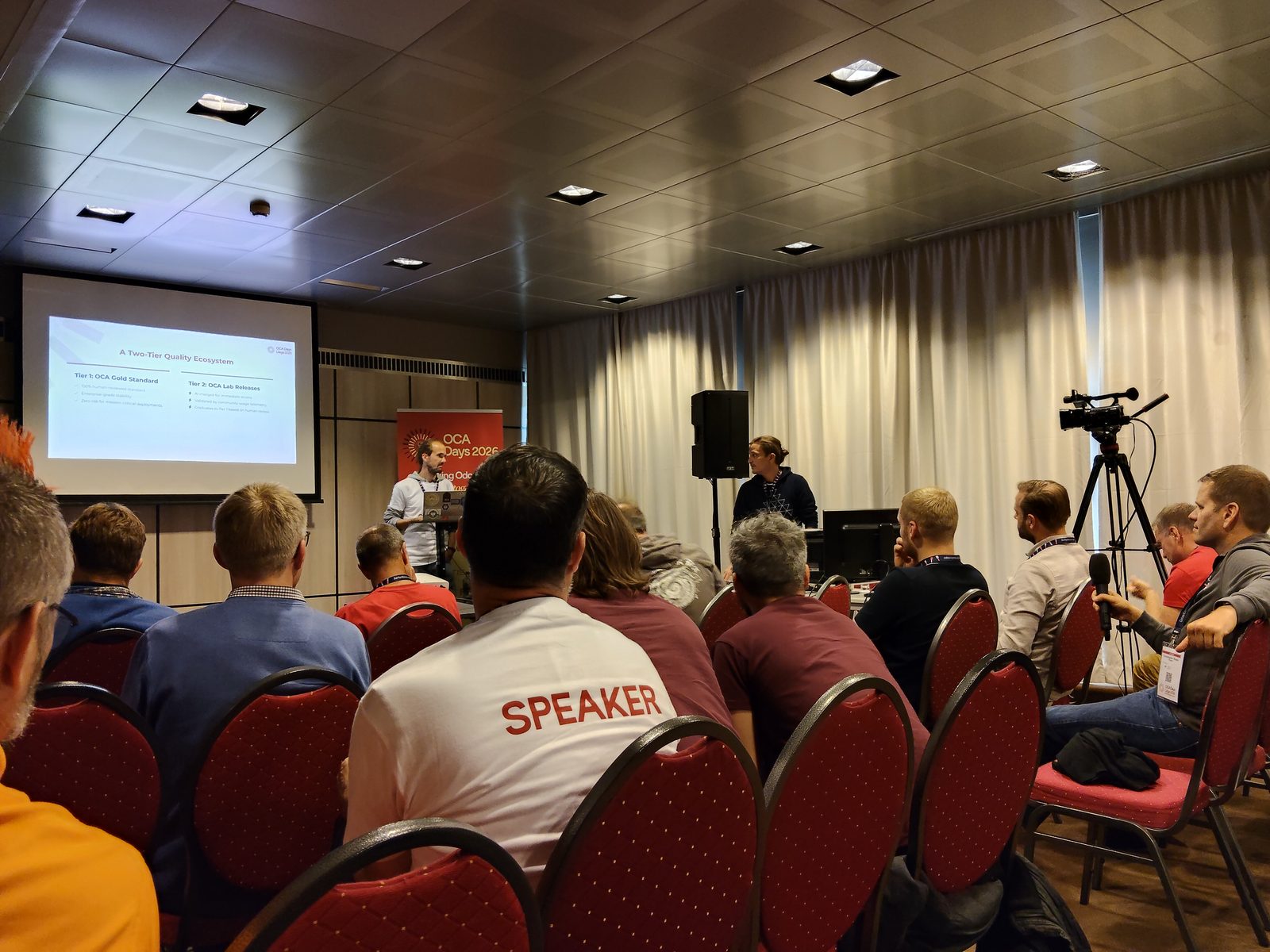
At Odoo Experience, many sessions announced new features of Odoo Enterprise or introduced other systems and vendors that work well alongside Odoo. It was a great way to catch up in one go on what the new version can do.
Speakers and attendees were further apart: in many sessions the speaker was the teacher, and the attendees were taught the answers.
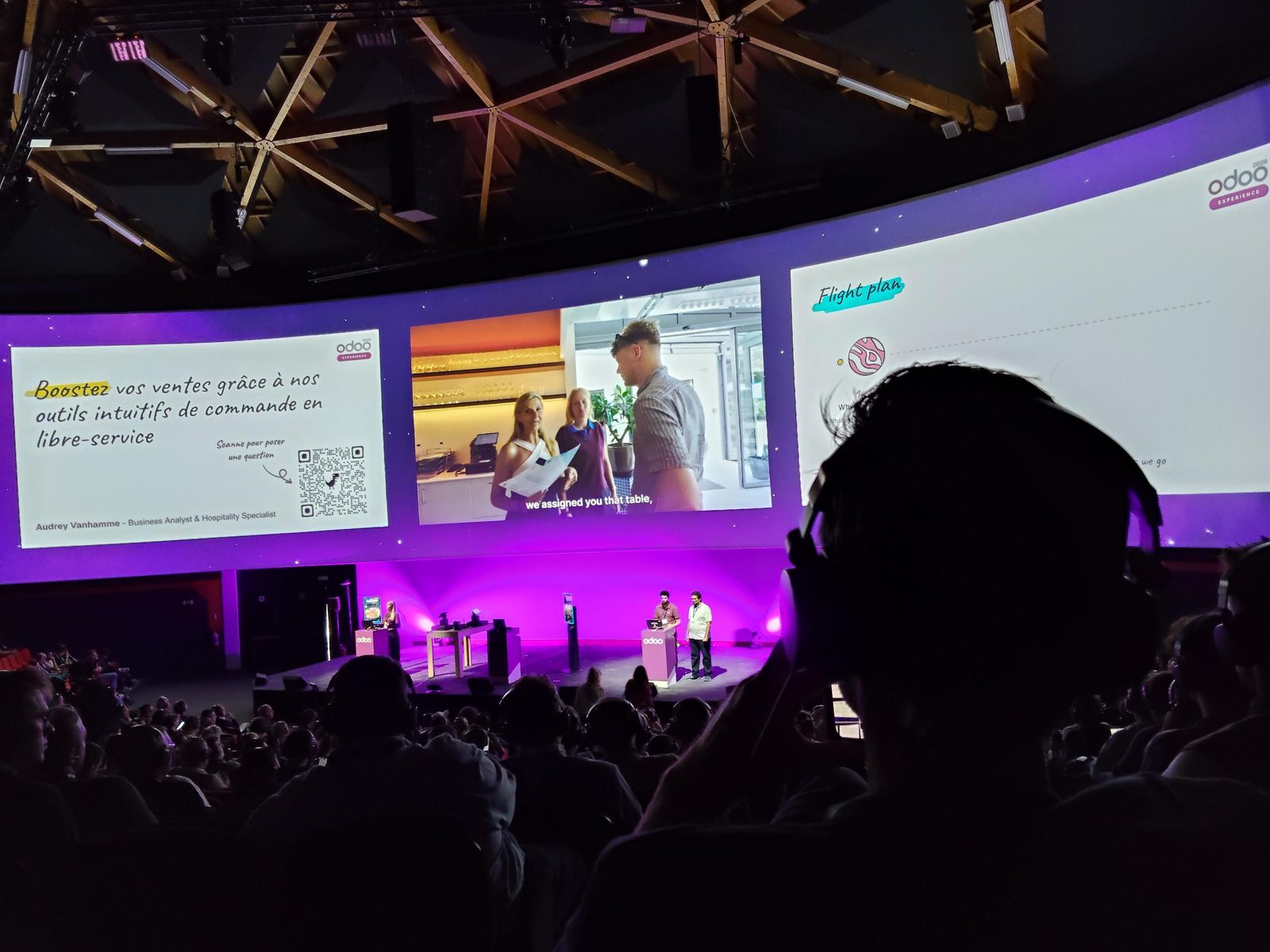
You can ask questions, but you scan a QR code and post them to a form. The speaker picks from those, so there is no guarantee yours will be chosen.
I asked one too, and was sorry it went unanswered.
Others had asked questions similar to mine, and those went unanswered as well. Perhaps because of time, it felt as if the questions that got answered were mostly the ones that take two or three phrases to answer. Anything complex ("can it handle a case like this?") tended to be passed over, I think.
How people connect
Personally, this was the difference that stayed with me most.
The OCA people are open, as you would expect from people who do open source. There is a welcoming feel to them.
When everyone was talking in a circle and I was standing alone next to it, meeting them for the first time, they quietly made a gap and caught my eye as if to say "come on in". That is the kind of people they are.
Once you start talking, the conversation opens out from OCA modules into Odoo in general: "which OCA modules do you use?" For me, actually talking to the people who maintain modules I use every day made a real impression.
Even after we finished talking, I could tell we would be back in touch on GitHub. I think this ongoing connection is what gives the OCA its sense of being a team.
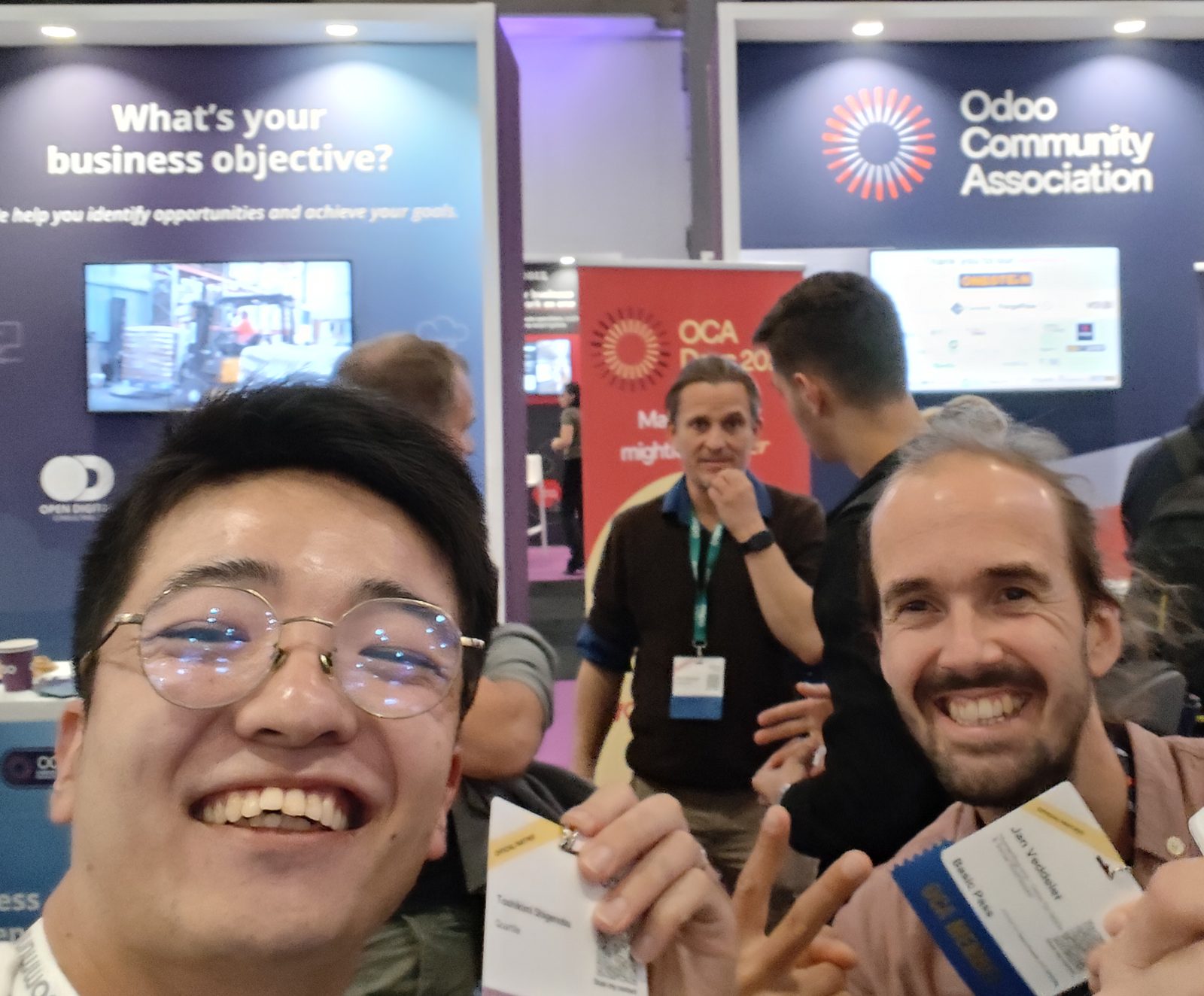
I met new people at Odoo Experience too. Odoo Experience has a games corner and live music in the evening, and that is where things get lively.
The live music was the best part: young people, older ladies, older guys, everyone dancing and going wild, and you enjoy it and become friends. That burst of fun is what Odoo Experience is all about, I think.
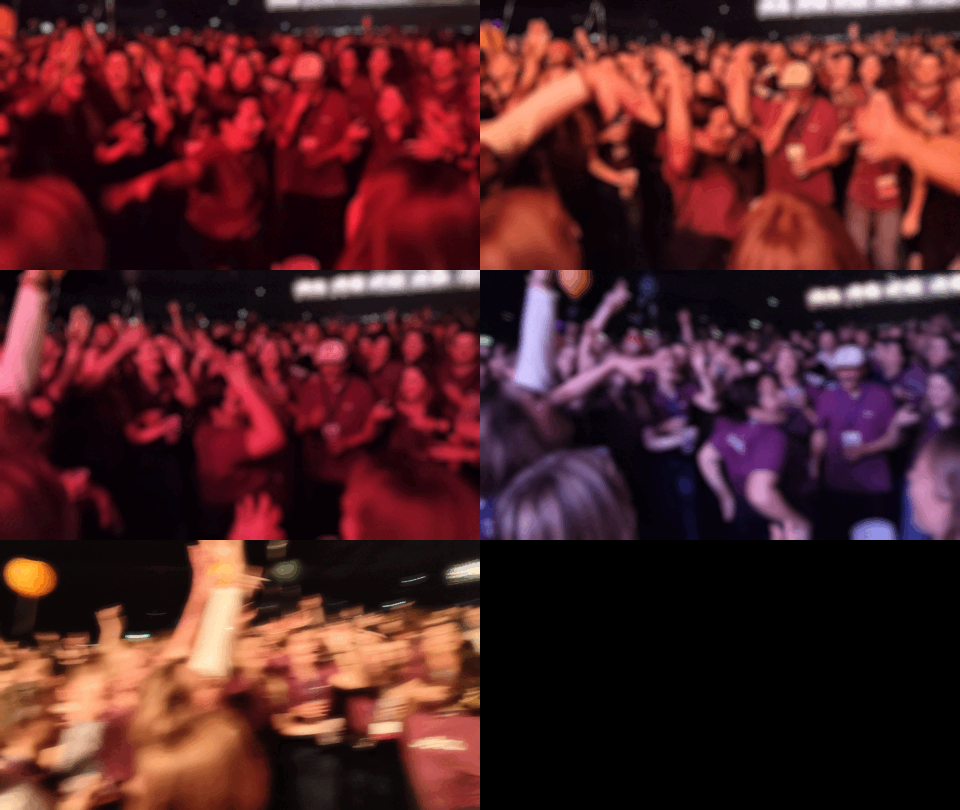
(The Odoo crowd in full swing. Everyone dances really well.)
Even so, I did not get the same sense of an ongoing relationship as with the OCA people.
(Honestly, I think the way I took part had a lot to do with it. I simply enjoyed the live music at the evening networking too much. Dancing in the front row, the time flew by. Further back, the grown-ups were chatting with a beer in hand. Had I gone over there, I might have got to know people better.)
Summing up
Having been to both events, I found the two "communities" quite different in character.
At the OCA, everyone builds, uses and improves the same modules. That gives a sense of solidarity as a team: "we are building something together". The sessions were great too, with speakers and attendees digging into problems together. I was glad to talk in person with the people who build the modules I use every day, and there were a lot of good people, so I want to keep building those connections.
At Odoo Experience, everyone is connected through Odoo, but they are not building something together. Instead, there was a feel that you could make lots of friends: people you enjoy the events and the live music with, and say "let's have a drink next time we meet" to. I also enjoyed seeing how broad the Odoo ecosystem is, and the sessions on new features.
Whether you are about to start with Odoo or already work with it, if you get the chance, do go to both communities and both events. They are both fun.
Odoo's two communities: what I learned in Belgium, where Odoo was born