![[Odoo case study] Assist Inc. (Yamato, Kanagawa - reuse goods buyer)](/web/image/blog.post/47/author_avatar/%5BOdoo%20case%20study%5D%20Assist%20Inc.%20%28Yamato%2C%20Kanagawa%20-%20reuse%20goods%20buyer%29?unique=a87191f)
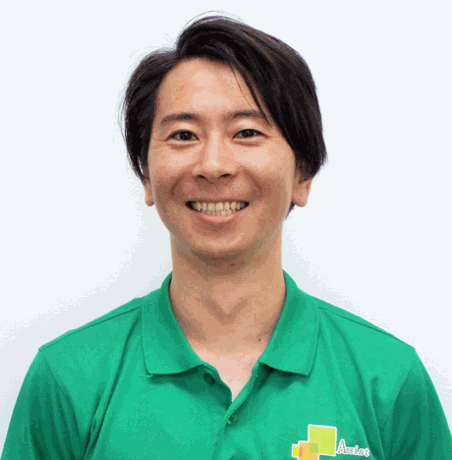
We asked Oikawa-san, who looks after systems at Assist Inc. — a company aiming to be Japan's largest business-to-business trader in general reuse — about their experience of adopting Odoo.
Scope: Sales (including e-commerce), Purchase, Inventory, Accounting, Website, Calendar, Email Marketing
Version: 11.0 Community
Users: around 30
Site: Yamato, Kanagawa (live March 2018)
Tell us about your company
We are a buy-in specialist for reuse goods, running six shops across Tokyo and Kanagawa, franchises included.
We buy a wide range of goods without restricting ourselves to any one category, furniture and home appliances among them.
We offer three ways to sell to us: we visit the customer, they bring goods to a shop, or they send them by courier.
Most enquiries come from customers with a move coming up who have a lot of furniture, appliances and other things they no longer need at home, and they usually want us to come to them.
The feedback we get is that selling it all in one go, with someone coming to the house to collect, is what makes it convenient.
What led you to choose Odoo?
Our business is buying goods from customers and making a margin selling them at secondhand markets and on e-commerce sites.
Both for the Secondhand Articles Dealer Act and for understanding how the business is doing, we have to track when, where, for how much and to whom each item we bought was sold.
Until then we managed the data with a great deal of Excel, but as the number of shops we ran grew, managing the goods we handle started to hit a ceiling. To list an item on an e-commerce site we would retype its title into a second spreadsheet — the same information entered twice. We would often hit the two-million-cell limit of a spreadsheet, and keeping past data usable was becoming difficult.
Separately from the Excel problem, goods taken to the secondhand markets were never captured as data, so we only had a rough idea of what each item had sold for. That made the effort of tracking margins by item, and the performance of individual buyers, large enough to be a nuisance.
So we set out to find a system where information entered once did not have to be entered again, and where goods we had bought could easily be turned into data and managed through to sale. We compared a number of ERP systems.
Japan has several ERP systems aimed at the reuse trade, but to get what we wanted out of an off-the-shelf ERP package the customisation costs mounted up beyond our budget, so we passed on all of them.
That was when we came across Odoo, an open source system from overseas. There were plenty of modules and plenty of examples of customisation, and the up-front investment was very low next to the other ERP systems, so we committed to building on Odoo.
What changed after you adopted Odoo?
The biggest benefit is that goods we buy can now go on sale on the website at very nearly the same moment the purchase order is created.
Previously an item was bought, then photographed by our merchandising staff another day, then uploaded to the e-commerce site, so it took time to get from purchase to sale. Odoo has shortened that lead time dramatically.
Sales on the e-commerce site are also transactions in the ERP as they stand, which has freed us from the nuisance of keeping data in step across several systems.
How have you found Quartile's service?
Their quotes are very easy to follow, and the proposals come from a real understanding of how we work, so we can hand things over with confidence.
For each request, Quartile look first at whether standard functionality can do it; if not, whether an existing third-party module applies; and only if that fails do they develop something new. Having that process out in the open is very reassuring.
As I said at the start, we had zero knowledge of systems, but Quartile patiently taught us the basics of Odoo, database design, how to look for third-party modules and so on. We came to understand Odoo well in a short time, and got the system into operation on the schedule we had planned.
Every one of the people we deal with thinks about our problems as though they worked here, and comes back with improvements they have considered from several angles.
What would you like to see improved?
Odoo is a very easy system to use on a PC, but managing it from a tablet or a smartphone feels a little awkward.
We would like to start with the website and make it easier to work with from a tablet or smartphone. (Note from Quartile: this comment led us to propose the OCA module Web Responsive, which they have since adopted.)
Anything else you would like to add
In our day-to-day dealings, Quartile often impress us with judgement backed by wide experience of Odoo implementations. We are very satisfied with a service delivered from the user's point of view.
From Tim, the consultant on the project
Assist are using their Odoo implementation as a foothold for building something that changes the reuse industry, and work on later phases continues now that Odoo is in place as their ERP. Because this is about building something that shifts an industry rather than installing a ready-made system, it remains genuinely exciting from a consultant's side.
We had been told Oikawa-san had little previous systems experience, but they made full use of a natural ability to absorb things and did far more than we expected — gathering requirements on the customer side, explaining Odoo's behaviour and how to use it, preparing the migration data. (Thank you!)
This project involved a fair amount of development, and without Odoo it might have been hard to meet some of Assist's sharper requirements. Working through customisations to fit their operation reminded us again how strong Odoo is as a development platform. We also had several occasions to propose improvements to Odoo itself, and conversely were helped by the open source community on points that were technically difficult. I think we managed to carry out the project both contributing to the community and drawing well on its strength.
[Odoo case study] Assist Inc. (Yamato, Kanagawa - reuse goods buyer)